

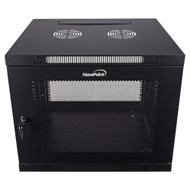
When Wall-Mount Cabinets Are the Right Choice
Posted by Tim Houghton, Senior Product Line Manager at Infinite Electronics on May 11th 2026
Not every network setup needs a full-size floor rack or dedicated server room. For home offices, apartments, small businesses and remote workspaces, wall-mount cabinets provide a practical way to organize networking equipment while conserving valuable floor space. Designed for lightweight, shallow-depth devices like switches, patch panels and routers, these cabinets help create a cleaner and more efficient setup without adding unnecessary complexity or cost.
Whether you are building a home lab, upgrading a small office network or simply trying to reduce cable clutter, wall-mount cabinets can offer the right balance of accessibility, protection and organization for smaller-scale environments.
Key Takeaways
- Wall-mount cabinets help maximize space in home offices and small workspaces
- They provide organized cable management for networking equipment
- Wall-mount cabinets work best with lightweight, shallow-depth devices
- Wall-mounted equipment remains accessible without occupying desk or floor space
- Smaller cabinets offer a cost-effective alternative to full-size floor racks
- They are ideal for remote workers, home labs and small business networks without dedicated IT rooms
Why Wall-Mount Cabinets Make Sense for Smaller Spaces
One of the biggest advantages of a wall-mount cabinet is its ability to conserve floor space. In many home offices and small businesses, every square foot matters. Traditional floor racks may not fit comfortably in apartments, shared workspaces or compact offices where networking equipment needs to coexist with desks, storage and daily operations.
Wall-mount cabinets solve this challenge by moving equipment off the floor and onto the wall, creating a more efficient use of available space. Smaller cabinets, particularly 15U and under, are often ideal for lightweight networking setups that do not require the capacity of a full-size enclosure.
For users building compact home networks, it is important to evaluate whether a dedicated rack or cabinet is even necessary. Smaller environments often benefit from a simplified approach that still maintains proper organization and airflow.
A Cleaner Way to Organize Networking Equipment
As networking equipment accumulates, cable clutter can quickly become difficult to manage. Routers, switches, patch panels and power distribution units often create tangled wiring that affects airflow, troubleshooting and overall appearance.
Wall-mount cabinets provide an enclosed and centralized location for equipment while helping keep cables contained and organized. This can improve airflow around devices, simplify maintenance and create a more professional-looking installation in spaces where the network may remain visible.
For home offices and small businesses without dedicated IT closets, maintaining a clean setup becomes especially important because networking hardware is often installed near workstations or shared areas.
Users comparing different enclosure styles should also consider the benefits of enclosed cabinets versus open-frame options depending on airflow, security and accessibility requirements.
Best Applications for Lightweight and Shallow Equipment
Wall-mount cabinets are designed primarily for lightweight equipment and shallow-depth devices. They are commonly used with:
- Network switches
- Patch panels
- Routers
- Modems
- Small UPS systems
- AV equipment
- Home lab components
Because wall-mounted installations place weight directly on the wall structure, equipment loads and cabinet depth should be carefully considered during planning. Compact networking environments typically do not require the deeper cabinet dimensions associated with enterprise server deployments.
For many small office and residential applications, a shallow wall cabinet provides sufficient capacity while minimizing the cabinet’s physical footprint.
Read more in our Rack and Cabinet Buyer’s Guide.
Convenient Access for Daily Maintenance
Another major benefit of wall-mount cabinets is accessibility. Mounting networking equipment at a comfortable height allows users to quickly reach ports, inspect cables and perform maintenance without working underneath desks or moving floor-standing racks.
This accessibility can be especially valuable in environments where equipment may need regular adjustments, including:
- Remote work setups
- Small business offices
- Educational spaces
- Home labs
- Retail locations
Many wall cabinets also include hinged designs or removable side panels that simplify equipment access during installation and troubleshooting.
For users selecting between cabinet types, understanding cabinet dimensions, mounting styles and future expansion needs can help avoid oversizing or undersizing a deployment.
A Cost-Effective Networking Solution
For smaller deployments, wall-mount cabinets often provide a lower-cost alternative to full-size floor racks. Businesses and home users can maintain organized infrastructure without investing in oversized enclosures designed for large enterprise environments.
The lower upfront cost makes wall cabinets particularly appealing for:
- Home offices
- Remote workers
- Startups
- Small businesses
- Temporary installations
- Entry-level home labs
Instead of dedicating budget to unused rack space, users can select a cabinet size that closely matches their actual equipment requirements while preserving room for modest future growth.
Vertical wall enclosures can also provide an efficient option for extremely compact networking applications where horizontal space is limited.
Choosing the Right Wall-Mount Cabinet
Selecting the right wall-mount cabinet depends on several factors, including:
- Available wall space
- Equipment depth
- Weight capacity
- Ventilation requirements
- Cable management needs
- Future expansion plans
Smaller 15U and under cabinets are commonly sufficient for home offices and small business networking environments. Choosing the correct size helps prevent unnecessary bulk while still allowing room for cable management and additional equipment if needed.
Proper planning also ensures that the cabinet location remains accessible for future upgrades and maintenance.
Why Wall-Mount Cabinets Are Ideal for Home and Small Office Networks
Wall-mount cabinets provide a practical networking solution for environments where space, accessibility and cost matter most. For home offices, remote workspaces and small businesses, they offer an organized way to manage lightweight networking equipment without requiring a dedicated server room or large floor rack.
By selecting the right cabinet size and configuration, users can create a cleaner, more efficient and more manageable networking setup that supports both current needs and future growth.
Find the Right Cabinet
Explore NavePoint wall-mount cabinet solutions designed for home offices, small businesses and compact networking environments.
Frequently Asked Questions (FAQs)
What is a wall-mount cabinet used for?
A wall-mount cabinet is used to organize and protect networking equipment such as switches, routers and patch panels while saving floor space. They are commonly used in home offices, small businesses and compact IT environments.
Are wall-mount cabinets good for home networks?
Yes. Wall-mount cabinets are ideal for home networks because they help organize equipment, reduce cable clutter and conserve space in home offices, apartments and shared work areas.
What equipment can go inside a wall-mount cabinet?
Wall-mount cabinets typically support lightweight and shallow-depth equipment including switches, routers, patch panels, modems and smaller UPS systems.
How do I choose the right wall-mount cabinet size?
The right cabinet size depends on your equipment count, device depth, weight requirements and future expansion plans. Smaller 15U and under cabinets are often sufficient for home and small office applications.
What is the difference between a wall-mount cabinet and an open-frame rack?
A wall-mount cabinet encloses equipment for improved cable management and protection, while an open-frame rack provides easier airflow and access but less physical security and containment.
Are wall-mount cabinets easy to maintain?
Yes. Many wall-mount cabinets include hinged access panels and removable sides that simplify maintenance, cable management and equipment upgrades.